Cardboard
My relationship with cardboard started freshman year at RIT's Charrette: a one-week wearable sculpture competition for first-year art students. My cardboard model won an award and was chosen to be in a gallery showing following the show, one of only 30 works selected from hundreds.
The next year, 2024, I had a stop motion assignment with heavy restrictions. The result: one of my most creative projects and items of my artistic identity: articulated cardboard dolls.
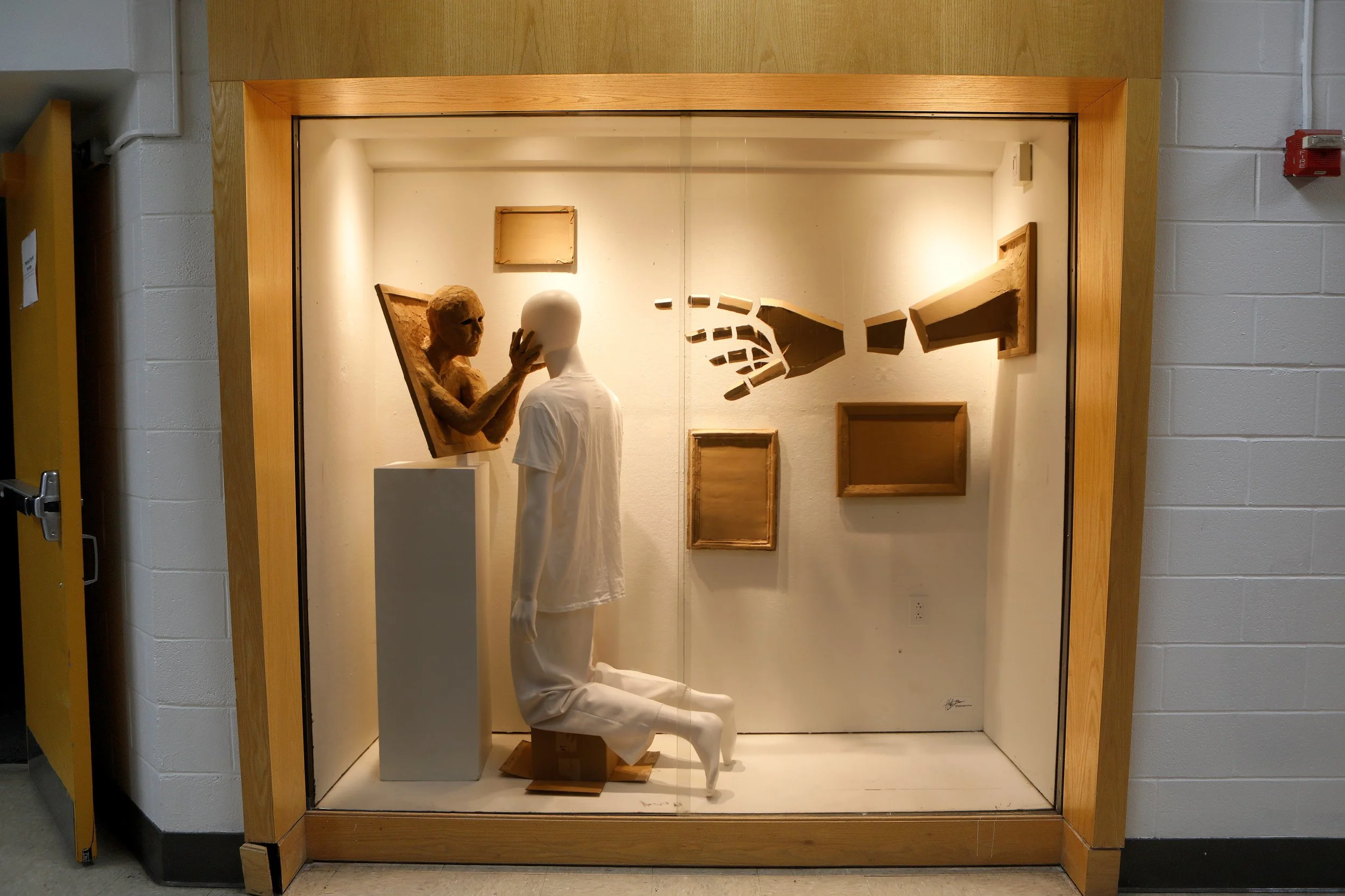
In 2025, I won a contest called Chase the Case for $500 and a solo exhibition in three 80 in x 80 in display cases, on view for five months in one of the most high-visibility hallways of the College of Art & Design. I named it Cardboard Sculptures and the Human Form.
I heard from friends and peers that this display stopped people in their tracks and was one of the most memorable artworks they’d seen. I later learned that an engineering student who didn’t know me (yet) went out of his way to see it twice, despite having no other connections to the College of Art.
This is my cardboard art. Cost should never be a barrier to making something that impacts.
art is accessible.
High craft has no material requirements.
Projects
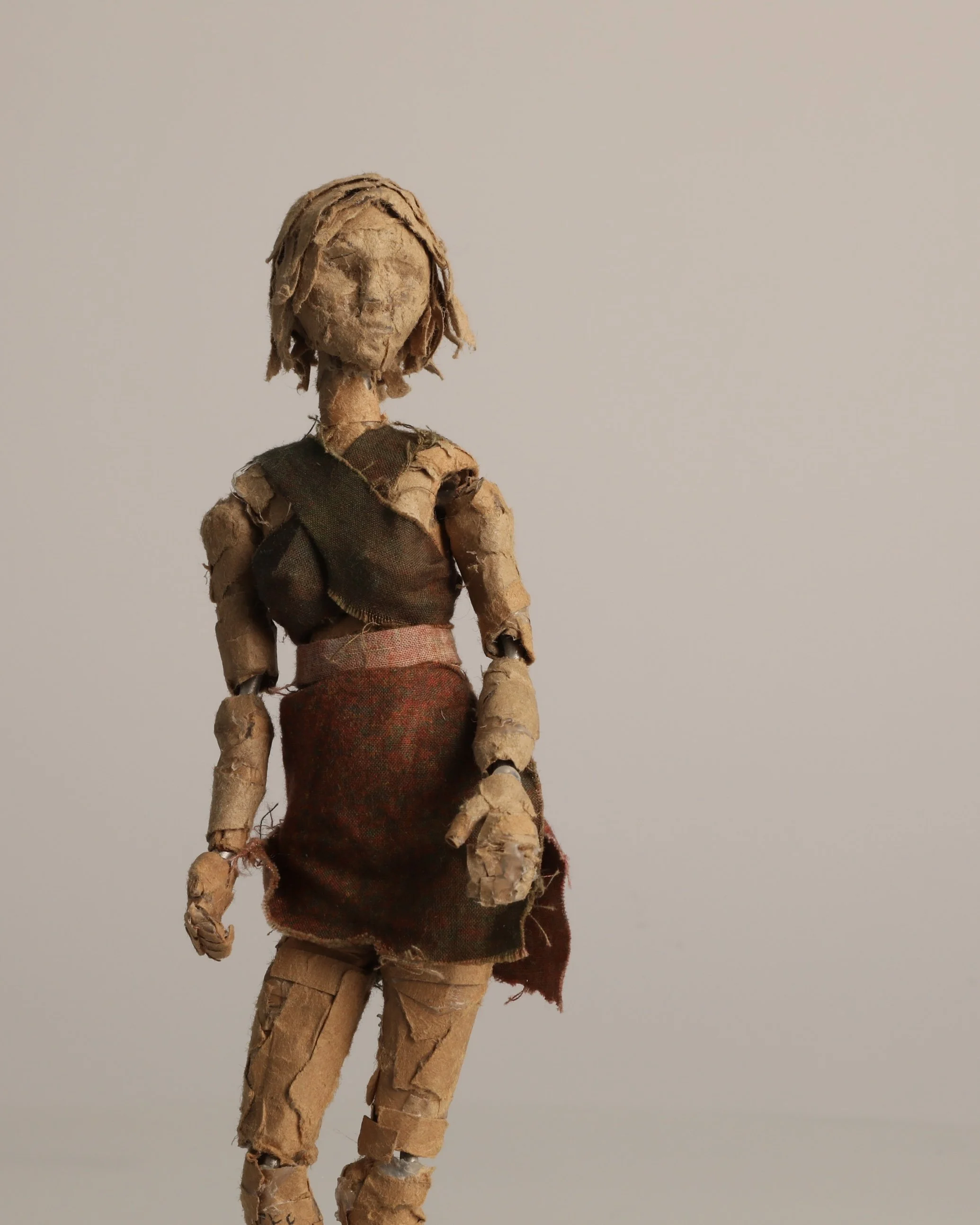
CARDBOARD DOLL 1 / KNIFE FIGHT PROTAGONIST- 2024
MATERIALS: CARDBOARD, HOT GLUE, WIRE, FABRIC SCRAPS
Full Process Explanation
From my Tiktok account
Explains my full journey creating the figure and filming the stop-motion scene, which you can watch here.
Cardboard dolls
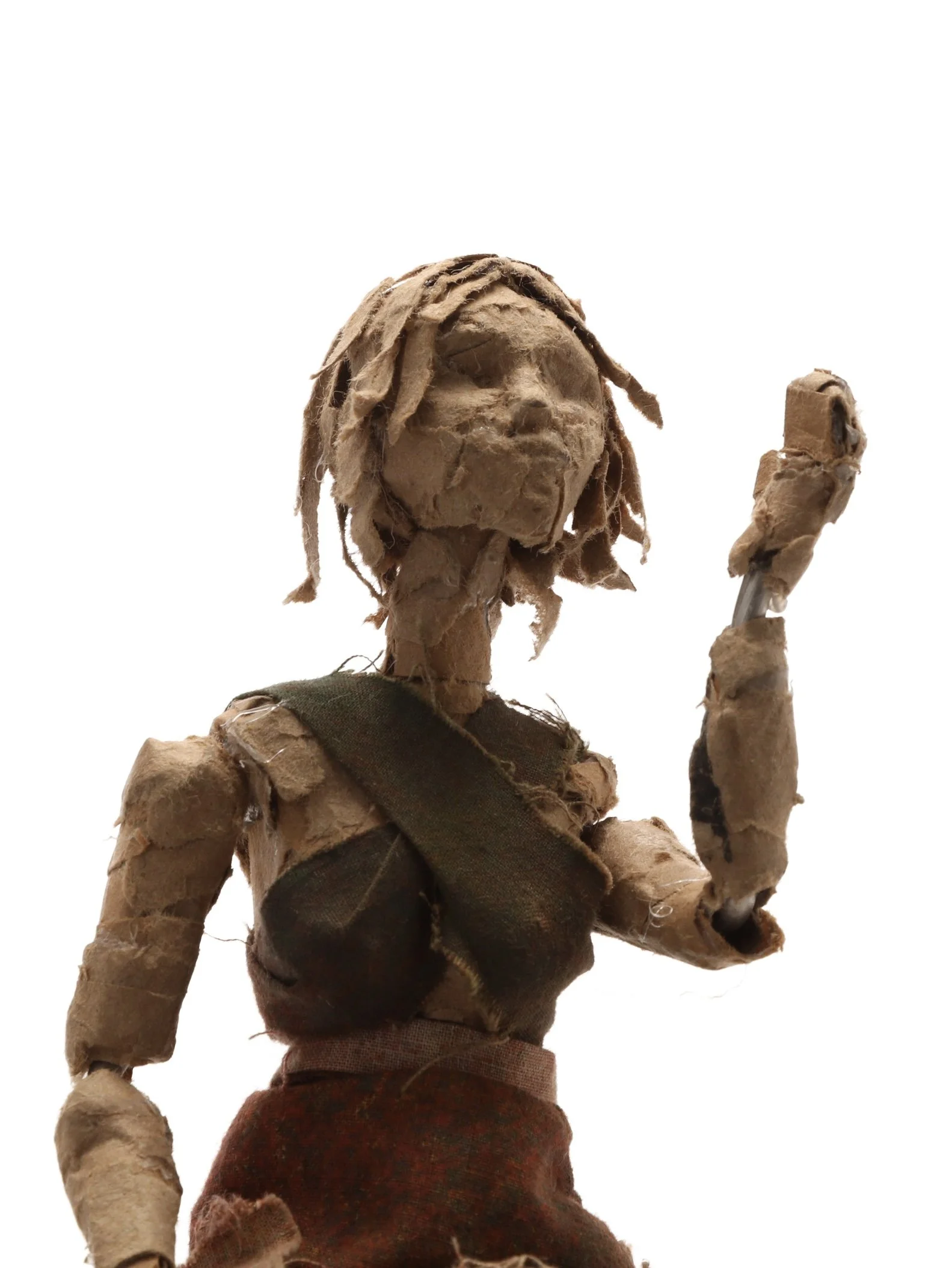
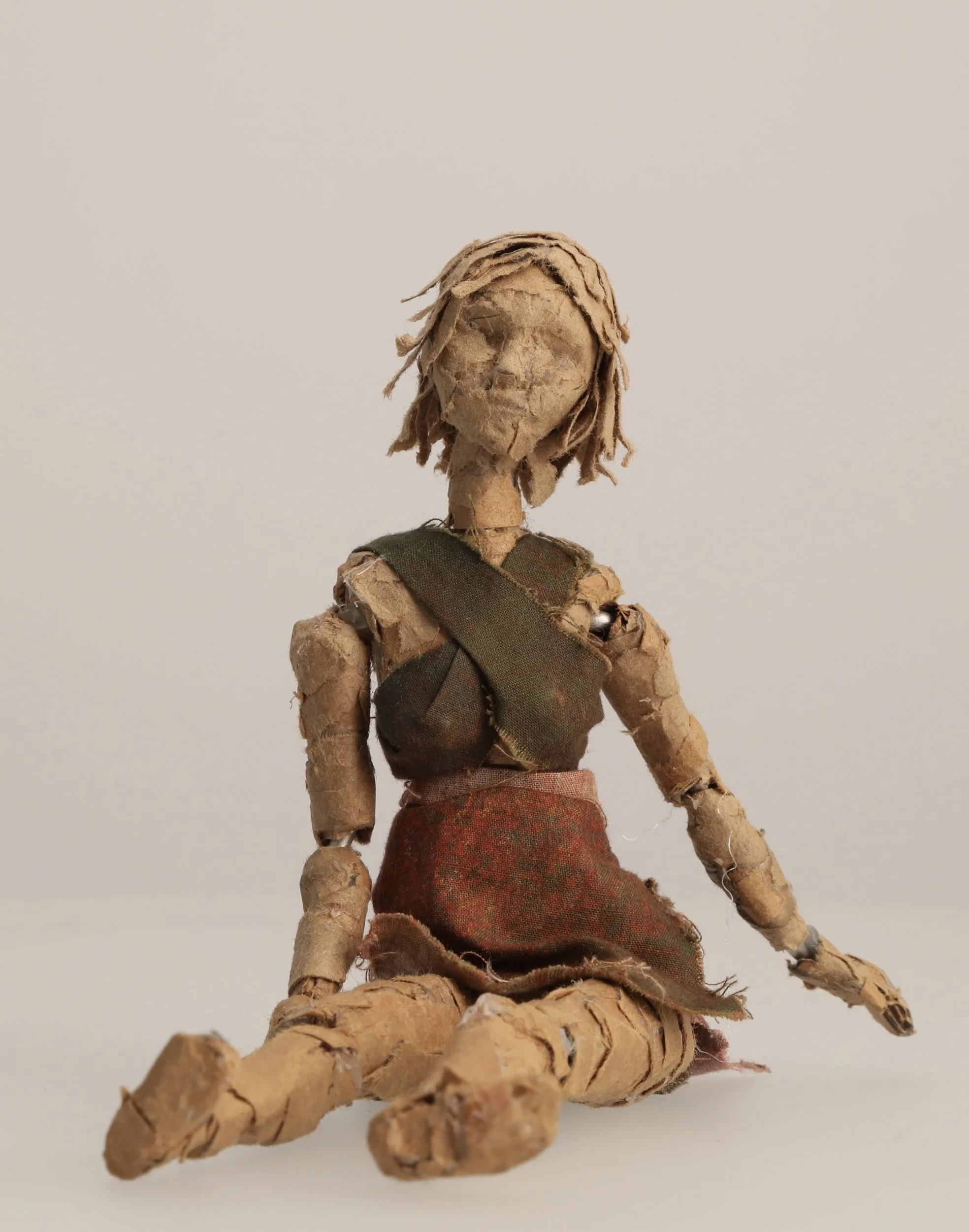
In 2024, in a class called 4D Design, a stop motion assignment came with a strict list of restrictions: no claymation, no Lego, no food blog recipes. The result was the cardboard figure on the left: articulated at the neck, shoulders, elbows, hips, knees, and ankles.
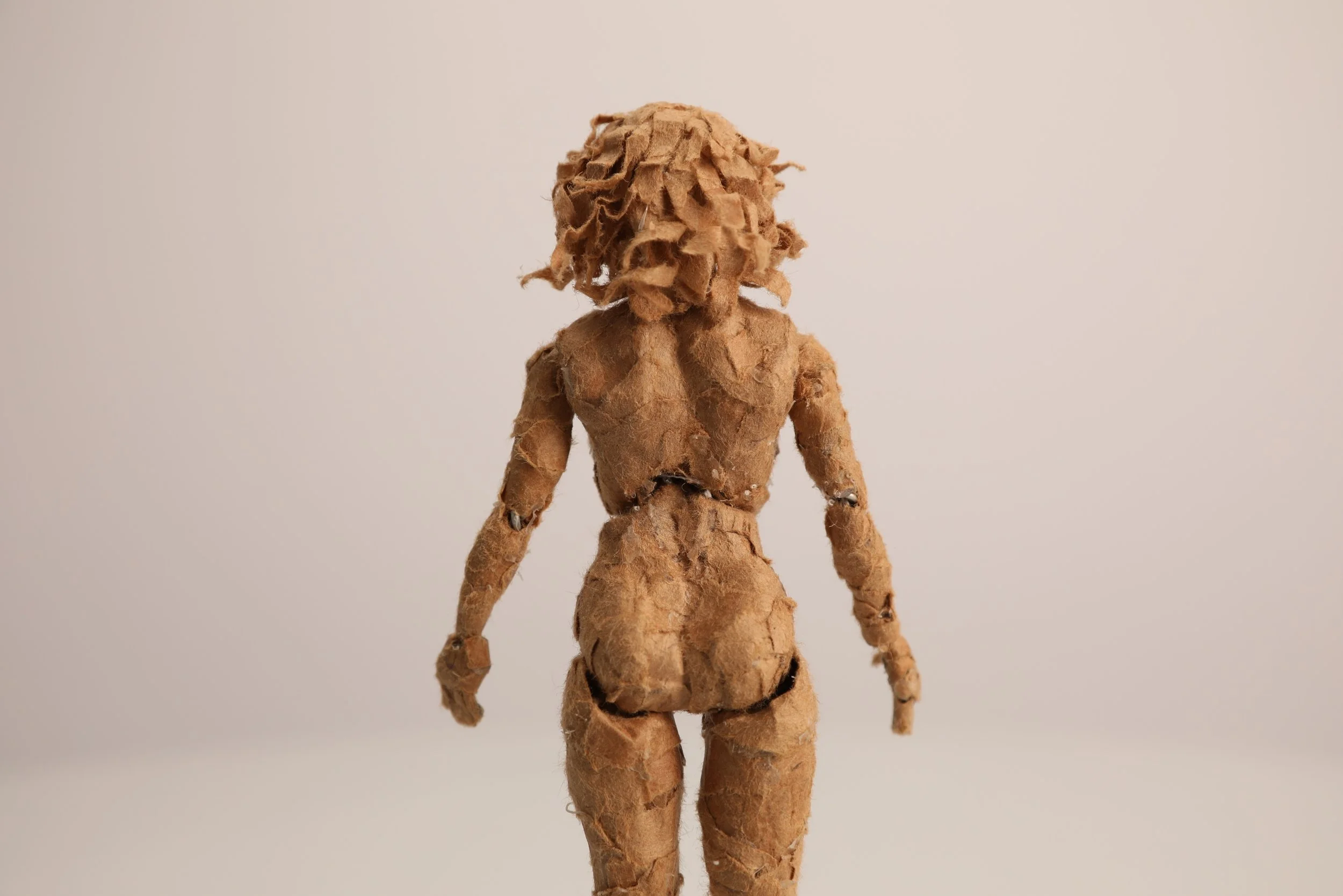
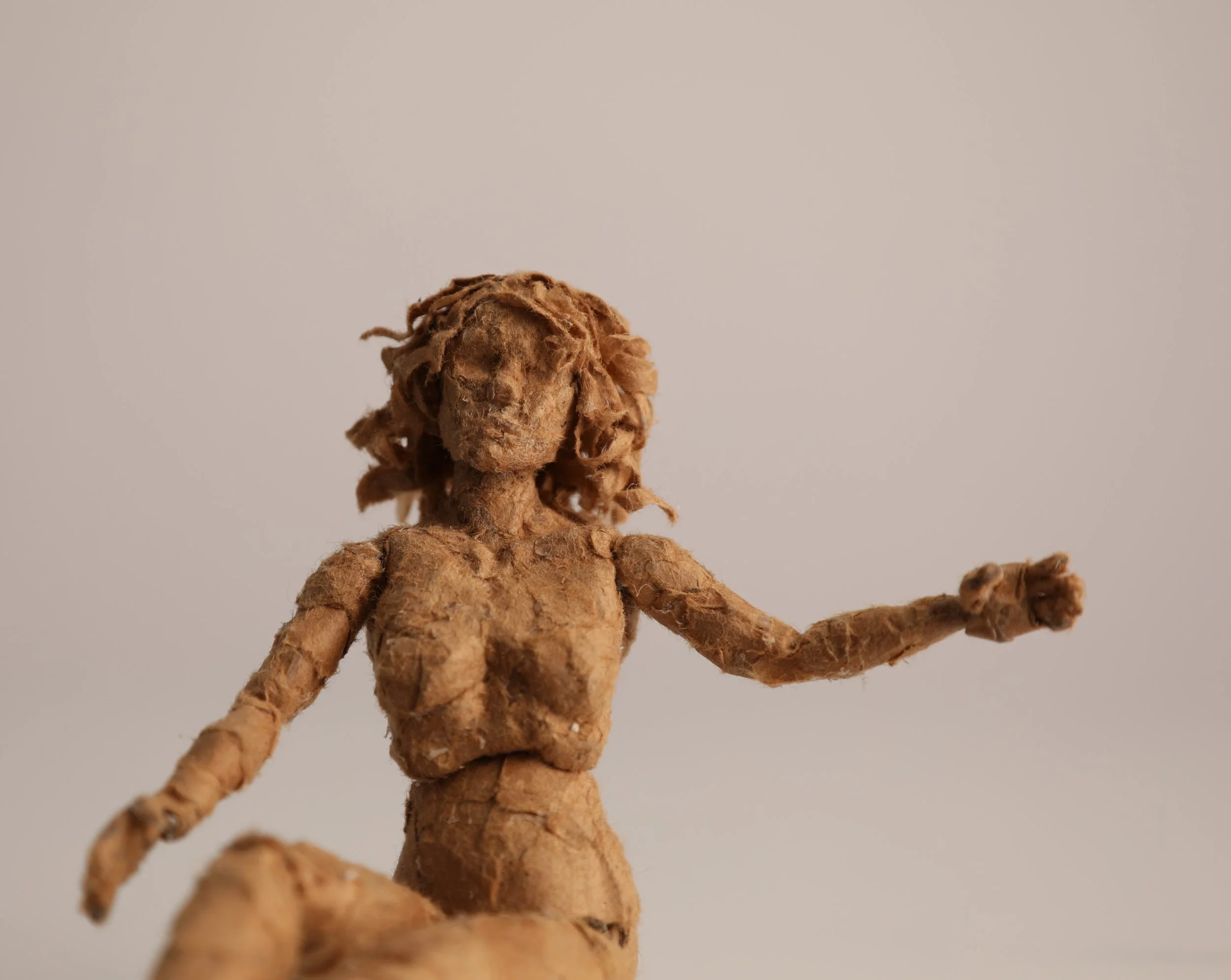
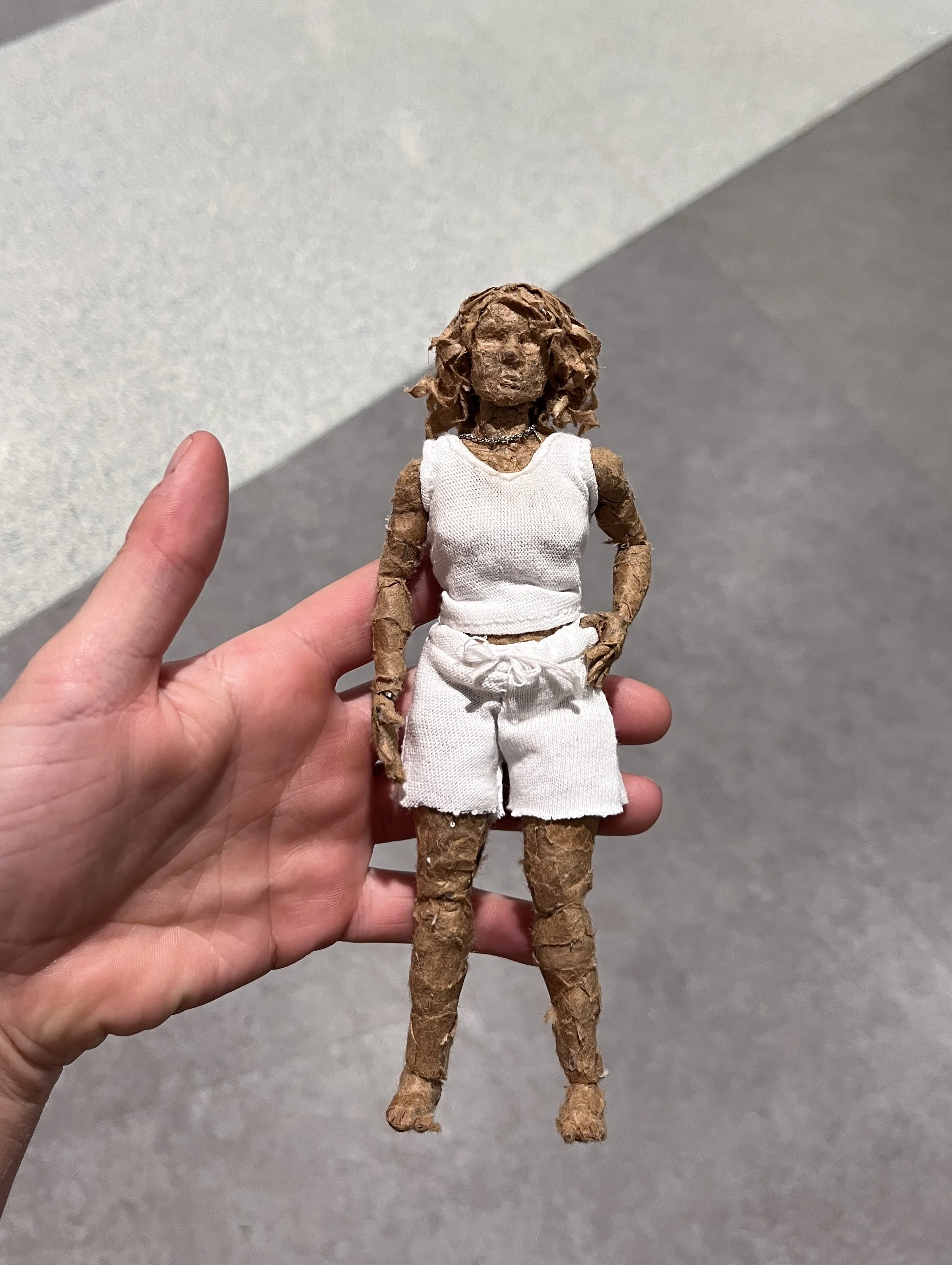
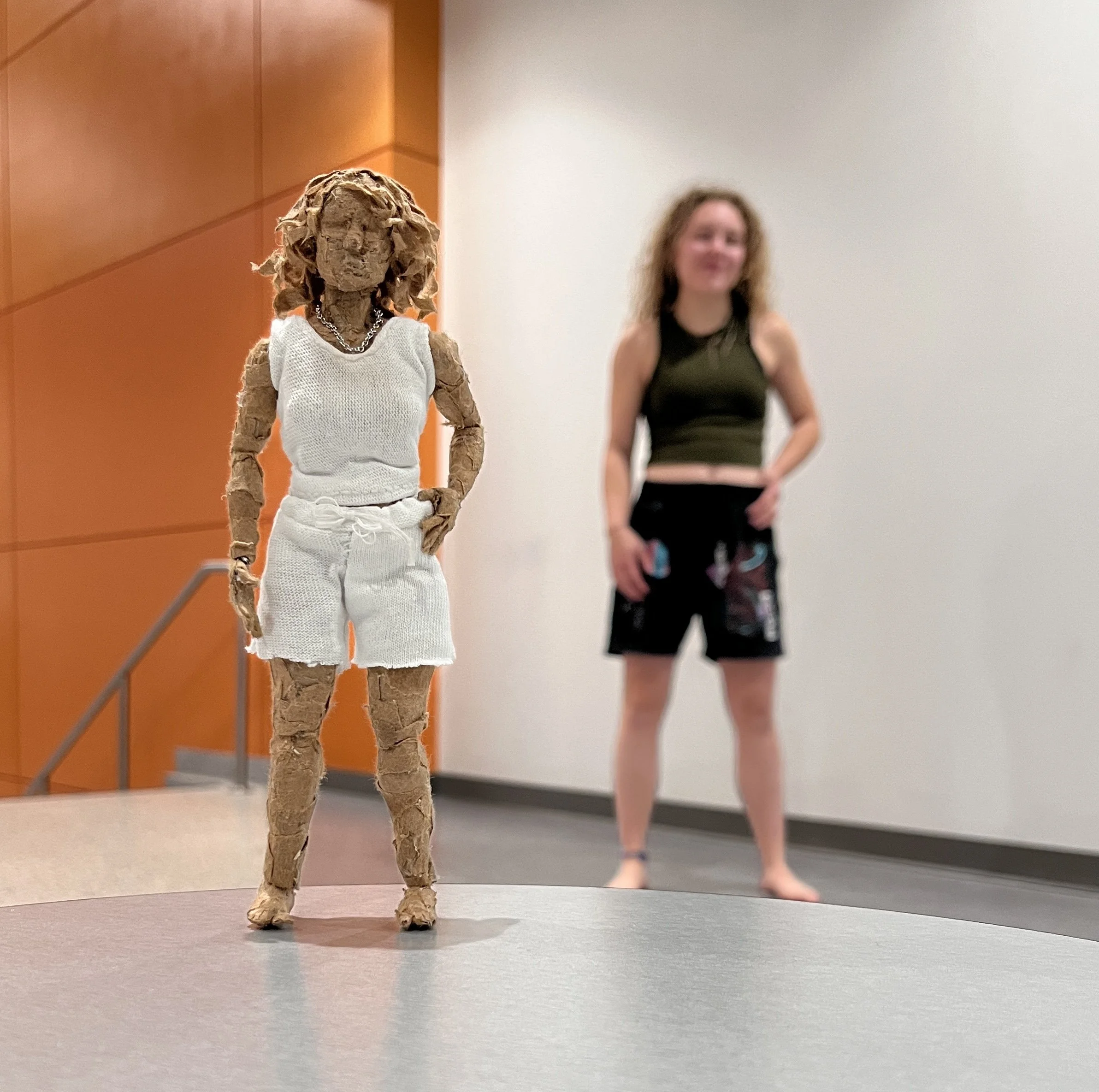
The following year I made a second doll, this time prioritizing anatomical accuracy: refined muscle definition, proportions closer to life, cardboard "skin" blended further over the joints, and articulated fingers and toe pads. A clear step forward in craft.
And yet the first girl still resonates with me more. She has undeniable personality and a story behind her. Version 2 shines in detail, but Version 1 wins in soul.
These dolls are an ongoing collection for future projects, markets, and commissions. Contact me if you’re interested in one!
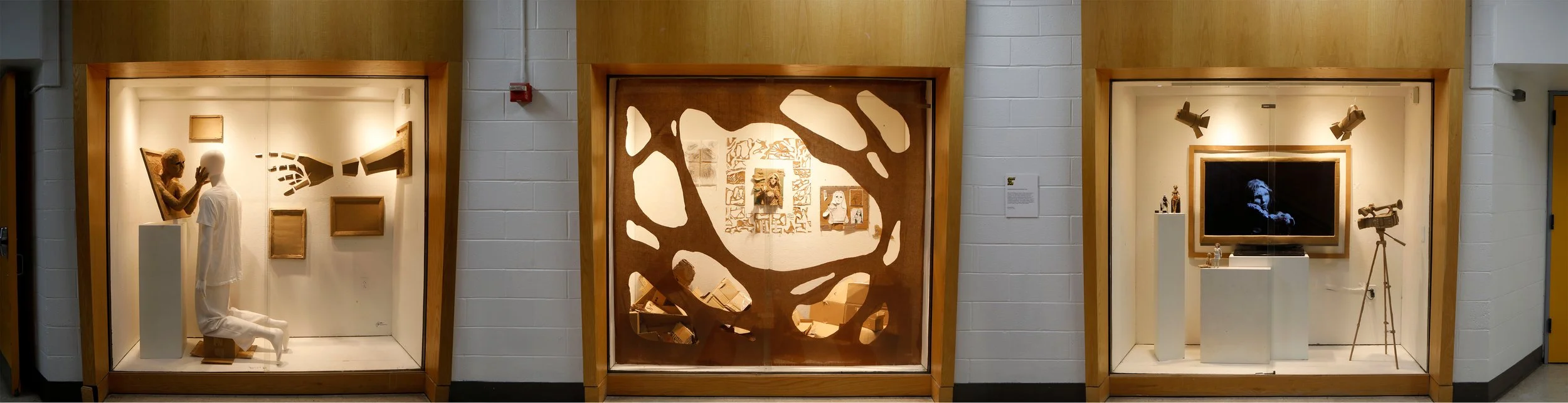
Cardboard Sculptures and the Human form
"Cardboard Sculptures and the Human Form" was the 2025 winning proposal for the annual "Chase the Case" competition at RIT. The winner has a solo exhibition across these three cases for six months and wins $500 in funding.
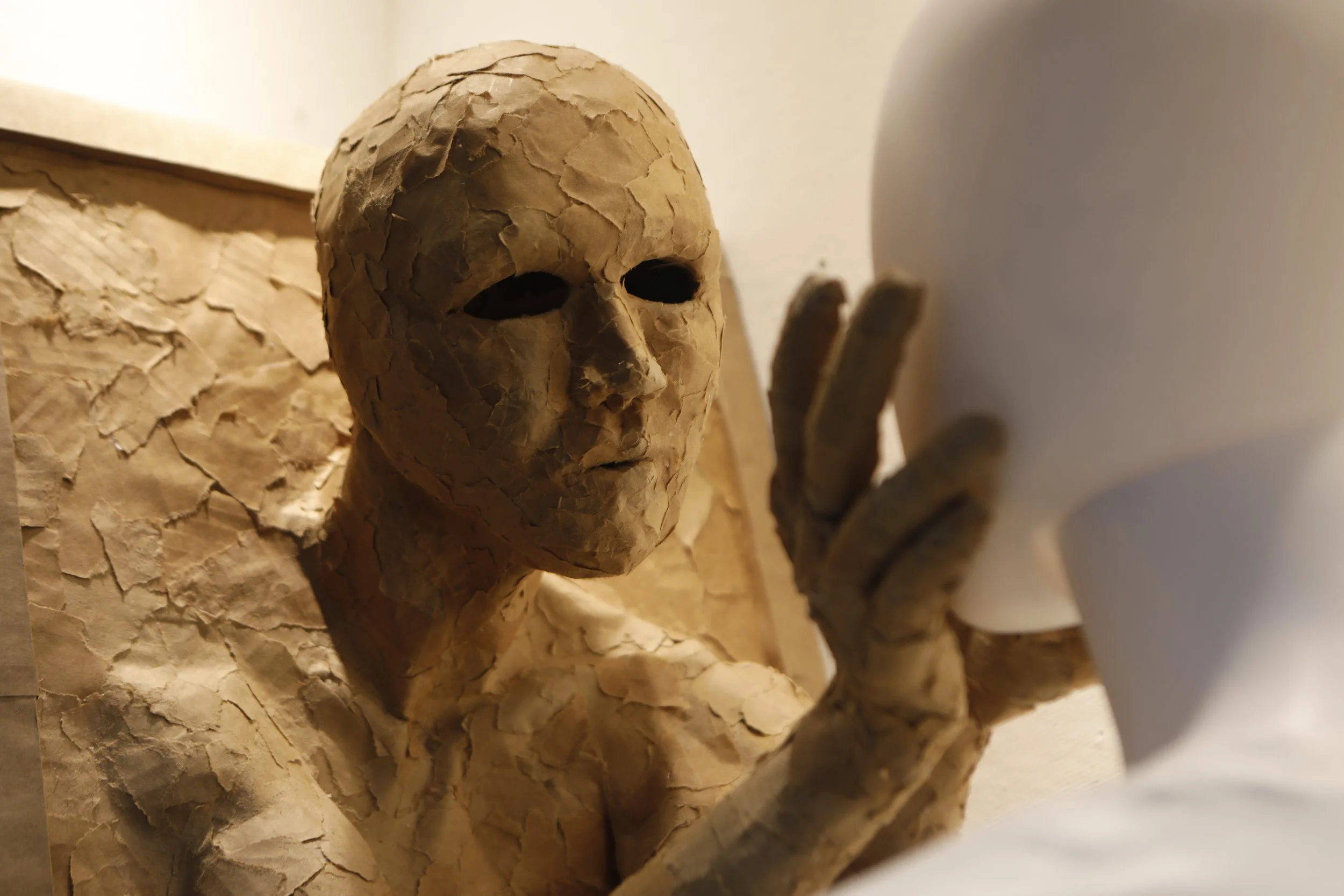
Case 1 highlights the experience one might have when encountering art, when a work feels like it reaches out to you, specifically.
The spotlight artwork of the case is titled “The Future of Illustration” and was originally intended to be displayed alone in a gallery so that viewers could place their own faces in its hands and have a physical face-to-face interaction. The cardboard feels soft, with some rough features, oddly very similar to the actual skin on someone’s calloused hands.
What if some limitations you face as an artist—lack of expensive materials, environmental concerns, and endless hours poured into your craft—weren't obstacles, but sources of inspiration?
Cardboard Sculptures and the Human Form is an installation that aims to inspire and promote new waves of thought about the ideas of accessibility, sustainability, and time commitment in the fields of arts and crafts. This immersive installation proves that creativity thrives in constraint, offering a fresh perspective on what it means to create with what's available.
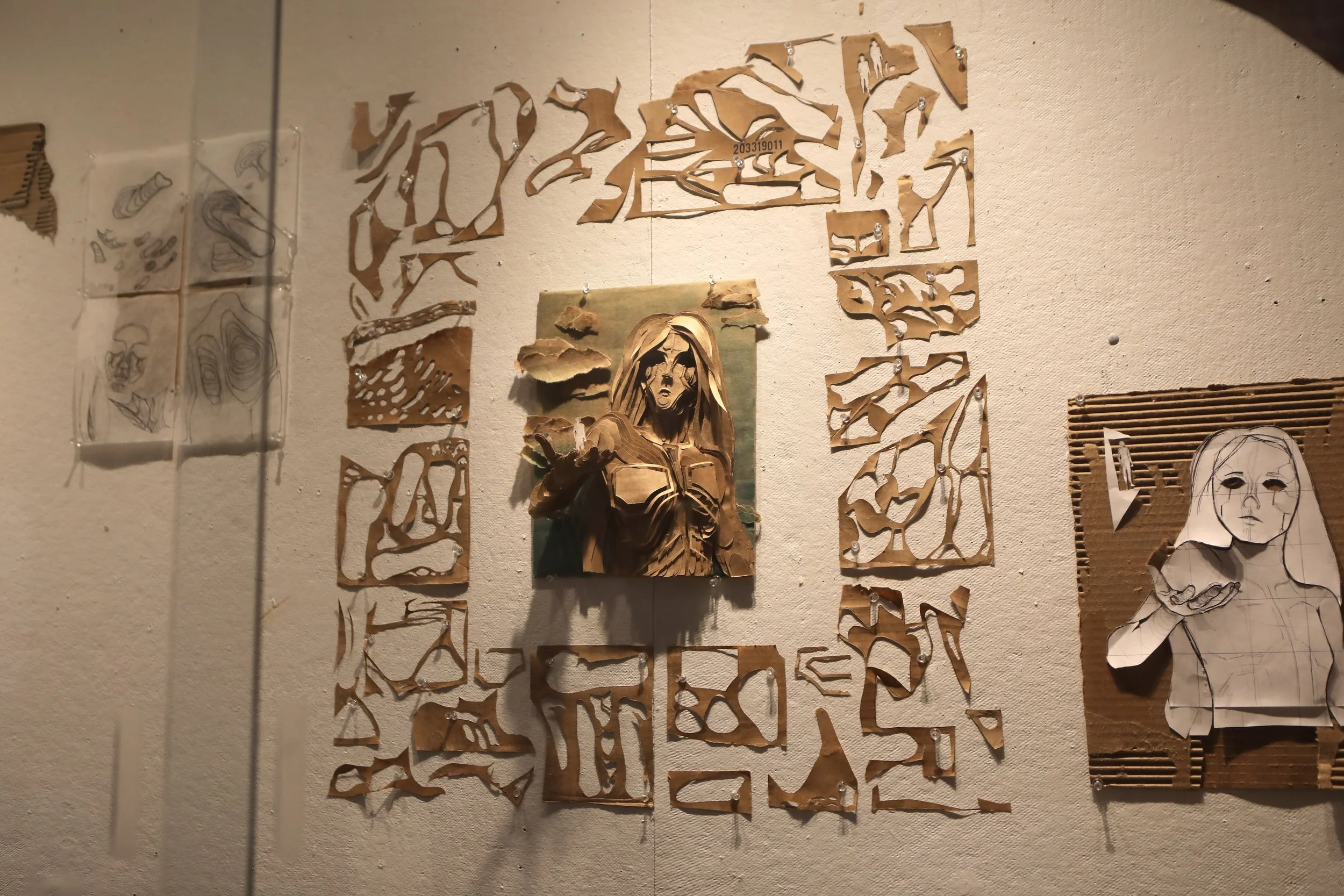
Case 2 highlights the behind-the-scenes of making art, of the hours that nobody but the artist sees.
A small cardboard relief sculpture is outlined by every scrap and sketch that went into its creation. The fabric overlay of the case resembles the scrap sheets, becoming a physical window that the viewer must get up close to look inside and see the soul of the artwork.
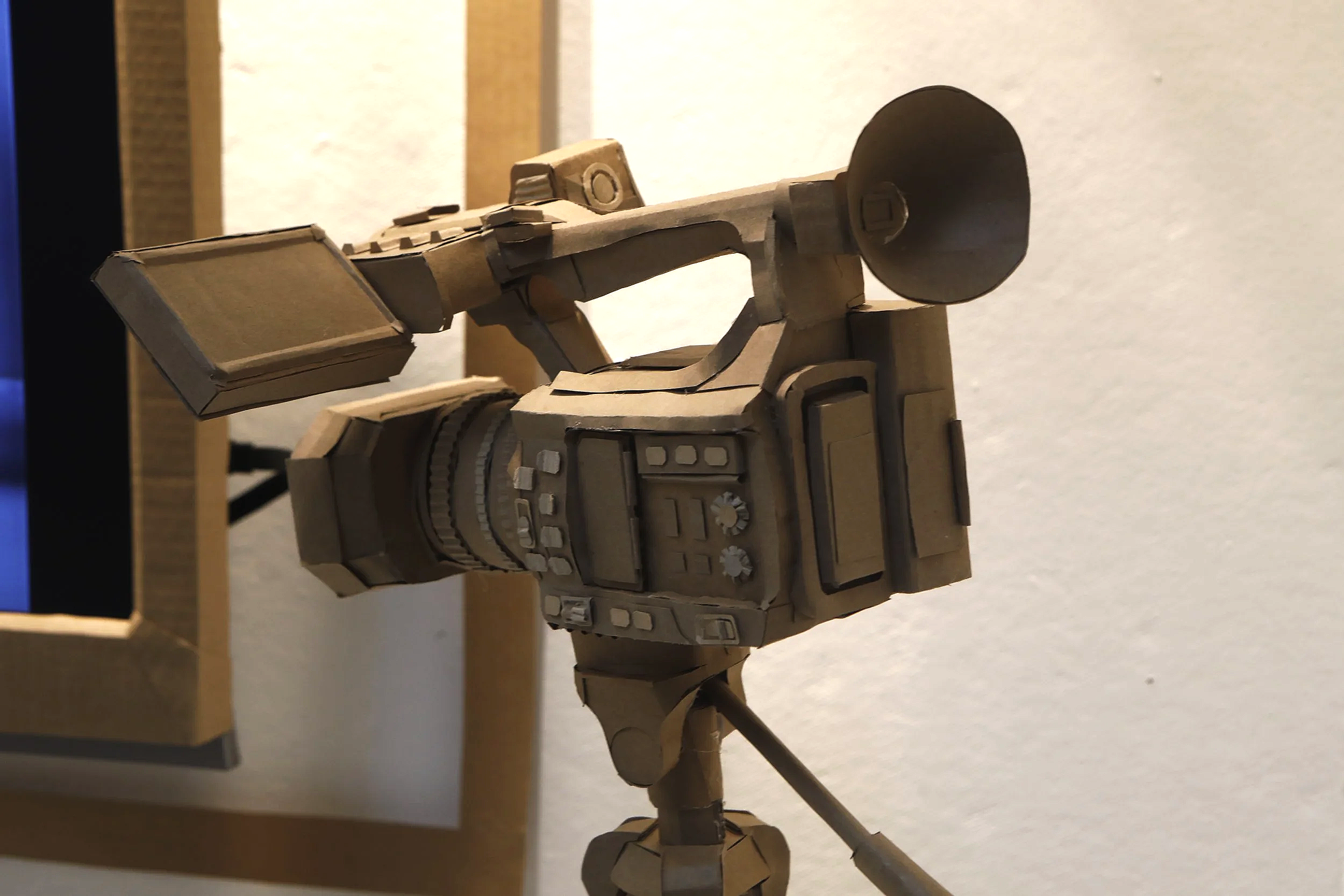
Case 3 highlights another side of the production aspect: when recording and film take an artwork and put into the public eye.
The Version 1 Cardboard Doll was also on display next to the antagonist of the scene, and this gave viewers the chance to view her in detail and see how the